

Lydia T.
Flight School in Las Vegas: What to Compare Before You Enroll
If you are comparing a flight school in Las Vegas, the real decision goes beyond the closest airport or the lowest-looking hourly rate. You are choosing the place where your schedule, instructor fit, aircraft access, budget, and confidence have to work together week after week.
The right Las Vegas flight school should help you answer five questions before you enroll: what training path fits your goal, where you will train, how lessons are structured, what aircraft and resources support the training, and how costs are explained. At Vegas Aviation, our flight training in Las Vegas hub is built to help you compare those decisions before you take the next step.
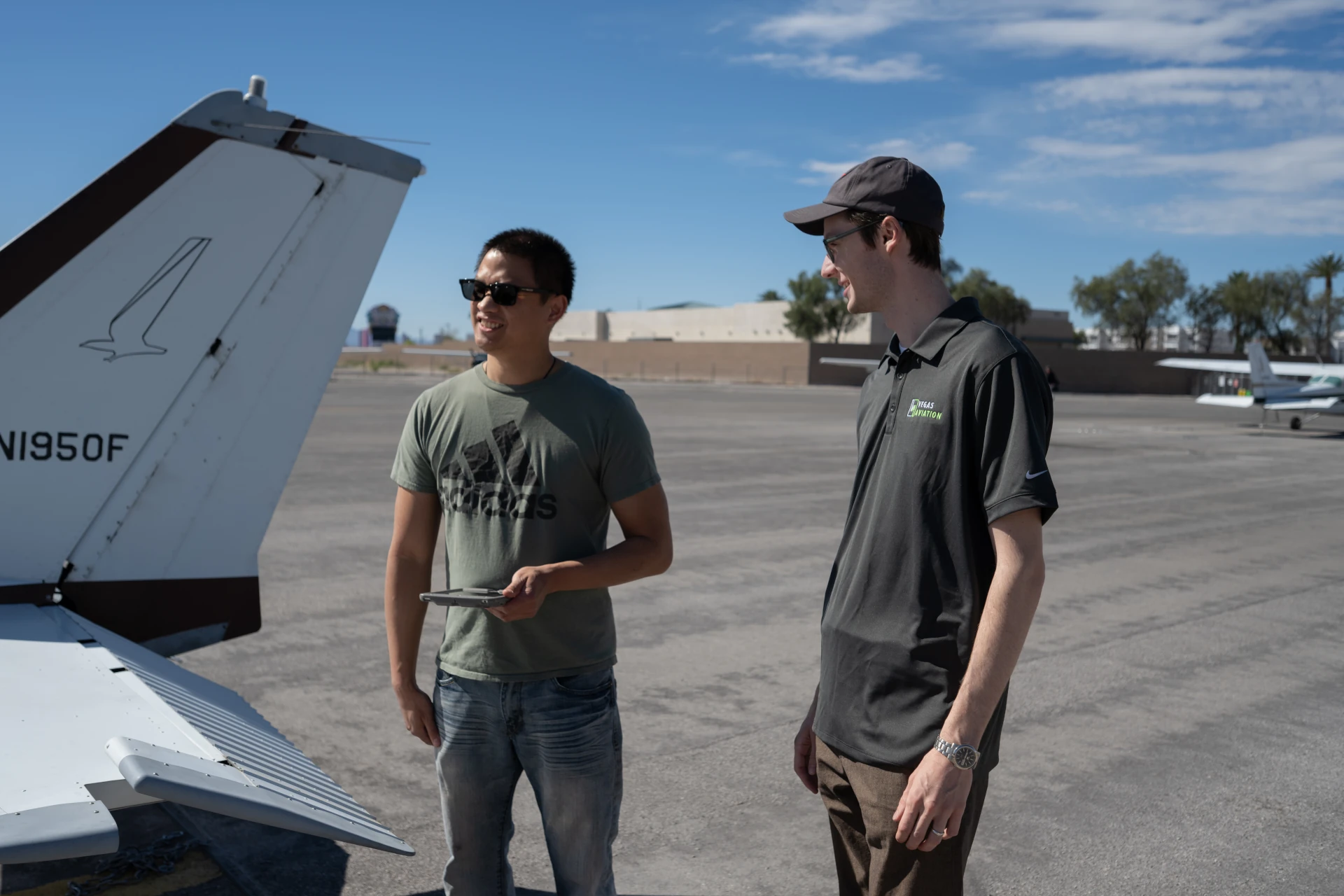
A good school comparison starts with the training environment you will use every week, including the assumptions behind the first advertised rate.
Choose the School Around the Goal You Actually Have
Your first comparison should be training path fit. A student who wants a private pilot certificate for personal flying needs a different conversation than a pilot adding an instrument rating or a career-minded student planning commercial, CFI, and multi-engine training.
Most new students start with private pilot training. If you are still deciding whether flying is for you, a discovery flight is often the most practical first step because you can meet the school, sit in the cockpit, and talk through what training would look like after that first flight.
If you already know aviation is part of your long-term plan, compare whether the school can support your next steps after the first certificate. Switching schools later can make sense in some cases, but it is easier to build momentum when your training path is clear from the beginning.
Compare the Full Training Path Before Your First Lesson
A strong school should be able to explain how your first lessons connect to later training. You can save future rating decisions for later while still understanding what is available if your goals grow.
At Vegas Aviation, students can compare beginner and advanced options through our Las Vegas pilot training programs:
| If your goal is… | Program to compare | What it helps you clarify |
|---|---|---|
| Learn to fly for personal use | Private Pilot Certificate | The first full certificate for most new airplane students |
| Build more precise cockpit and weather decision-making | Instrument Rating | Procedures, instrument scan, approaches, and IFR planning |
| Train toward professional pilot privileges | Commercial Pilot Certificate | Advanced maneuvers, standards, and next-step career planning |
| Teach and build instructional skill | CFI / CFII Training | Lesson planning, teaching technique, and instructor preparation |
| Add twin-engine aircraft experience | Multi-Engine Training | Systems, performance, and multi-engine decision-making |
| Practice procedures on the ground | Flight Simulation | Focused repetition for flows, scan, and scenario work |
For career-minded students, treat that table as a planning conversation for future training goals. Your actual route depends on FAA requirements, proficiency, scheduling, budget, aircraft and instructor availability, and the kind of flying you want to do.
Location Should Make Consistent Training Easier
Flight training rewards consistency. A school that is hard to reach, difficult to schedule around, or disconnected from your routine can make progress harder before aviation even becomes the challenge.
Vegas Aviation is based at North Las Vegas Airport/KVGT, serving students from Las Vegas the surrounding Southern Nevada area. When you compare schools, look beyond the map pin and think through the weekly rhythm: the commute, parking, lesson times, how often you can realistically fly, and how the airport environment fits your confidence level.
The right training airport supports the kind of training you need, with a schedule you can keep and a team that helps you understand the environment before you feel behind.
Ask How Lessons Are Structured Before You Enroll
The strongest school conversations are specific. You should leave with a clear sense of what happens before, during, and after a lesson, especially if you are starting from zero time.
Ask how the school handles preflight briefings, ground instruction, lesson frequency, progress reviews, simulator use, solo preparation, and checkride preparation. Look for a training system that gives your instructor room to adapt while still keeping your path understandable.
Vegas Aviation is a Part 61 flight school, which can give students more room to shape lesson pace and scheduling around work, school, family, or returning to training after time away. FAA requirements still apply for the certificate or rating you want, so planning and communication become especially important. You can start that conversation through our enrollment form when you are ready to build a training plan.
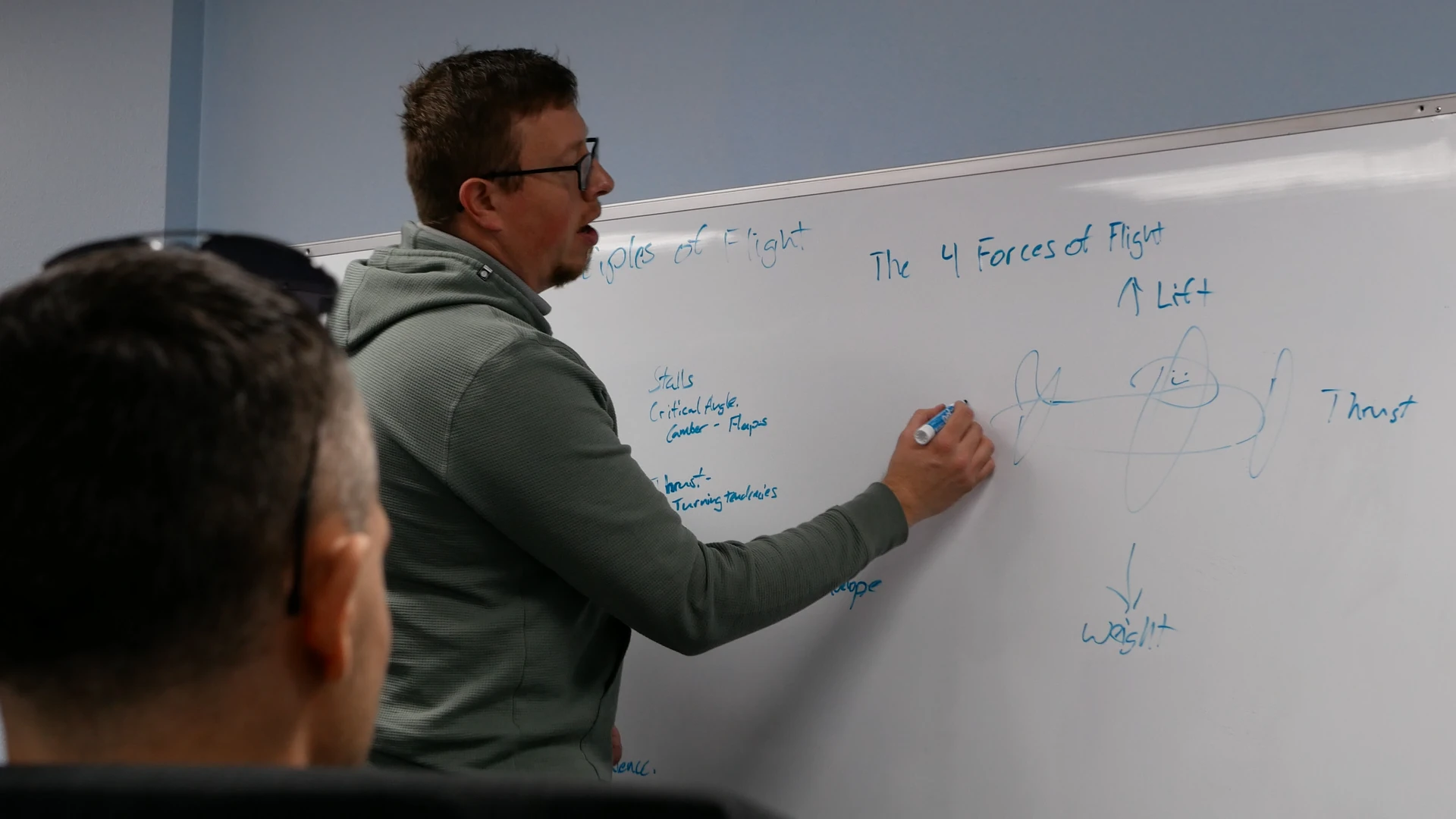
Ground instruction, preparation, and lesson rhythm can make flexible training easier to sustain.
Aircraft Access and Training Resources Affect Momentum
Aircraft access goes beyond fleet size. It affects how often you can fly, how easily you can reschedule, and whether the school can support your next phase of training.
When comparing Las Vegas flight schools, ask what aircraft are used for primary training, how students schedule aircraft and instructors, whether simulator resources are available, and how maintenance or dispatch decisions are communicated. Avoid treating any school as stronger simply because it uses a certain aircraft type. A good trainer should fit the mission, the lesson, and your stage of training.
Our fleet and aircraft resources support primary training, advanced ratings, and aircraft rental conversations. Students who expect to continue into instrument, commercial, CFI, multi-engine, or simulator-supported training should also compare whether the school can keep that path under one roof through the flight training hub.
Pricing Clarity Matters More Than the Lowest Number
Flight training cost is one of the biggest reasons students hesitate, and it deserves a clear conversation. A useful cost estimate should separate the major pieces: aircraft time, instructor time, ground instruction, simulator use, supplies, FAA knowledge tests, checkride expenses, and extra training needed to reach proficiency.
Be cautious with any comparison that makes cost sound fixed for every student. Actual totals can vary with lesson frequency, study habits, weather, maintenance, aircraft availability, instructor schedules, checkride timing, and how quickly a student develops proficiency.
Before you enroll, review our flight training pricing resources. If payment planning is part of the decision, look at financing resources and scholarship resources early. Financing terms, eligibility, and scholarship availability depend on the provider and program, so use those resources as planning tools rather than promised outcomes.
Instructor Fit Should Make Feedback Easier to Use
Instructor fit is practical. You need someone who can explain the next skill clearly, correct mistakes without making the cockpit feel chaotic, and help you understand what to practice before the next lesson.
When comparing schools, ask how students are matched with instructors, what happens if schedules change, and how progress is tracked over time. If you are nervous about solo flight, checkride preparation, radio communication, or returning after a training gap, bring that up early. A serious school should help you understand the support available instead of making you feel like you should already know everything.
Students often remember the emotional side of training as much as the technical side: the first takeoff, the first time radio calls start to make sense, or the lesson where a hard maneuver finally clicks. That is why staff culture matters. You can get a feel for our approach by starting with a discovery flight or comparing programs on the flight training page.
A Supportive School Still Gives Straight Answers
Flight training should feel exciting while staying grounded in real planning. Be careful with promises that sound too simple: fixed timelines, fixed final cost, automatic checkride outcomes, career claims, or claims that one school is automatically superior.
A better sign is clear, steady guidance. The school should help you understand what you can control, what can vary, and what the next step looks like. At Vegas Aviation, that means helping students compare training paths, pricing, aircraft access, and resources without making the process feel bigger than it needs to be.
If your goal includes advanced or career-track training, use the comparison stage to ask about the path from private pilot into instrument, commercial, CFI, or multi-engine training. The answer should help you plan without pressuring you into every future step at once.
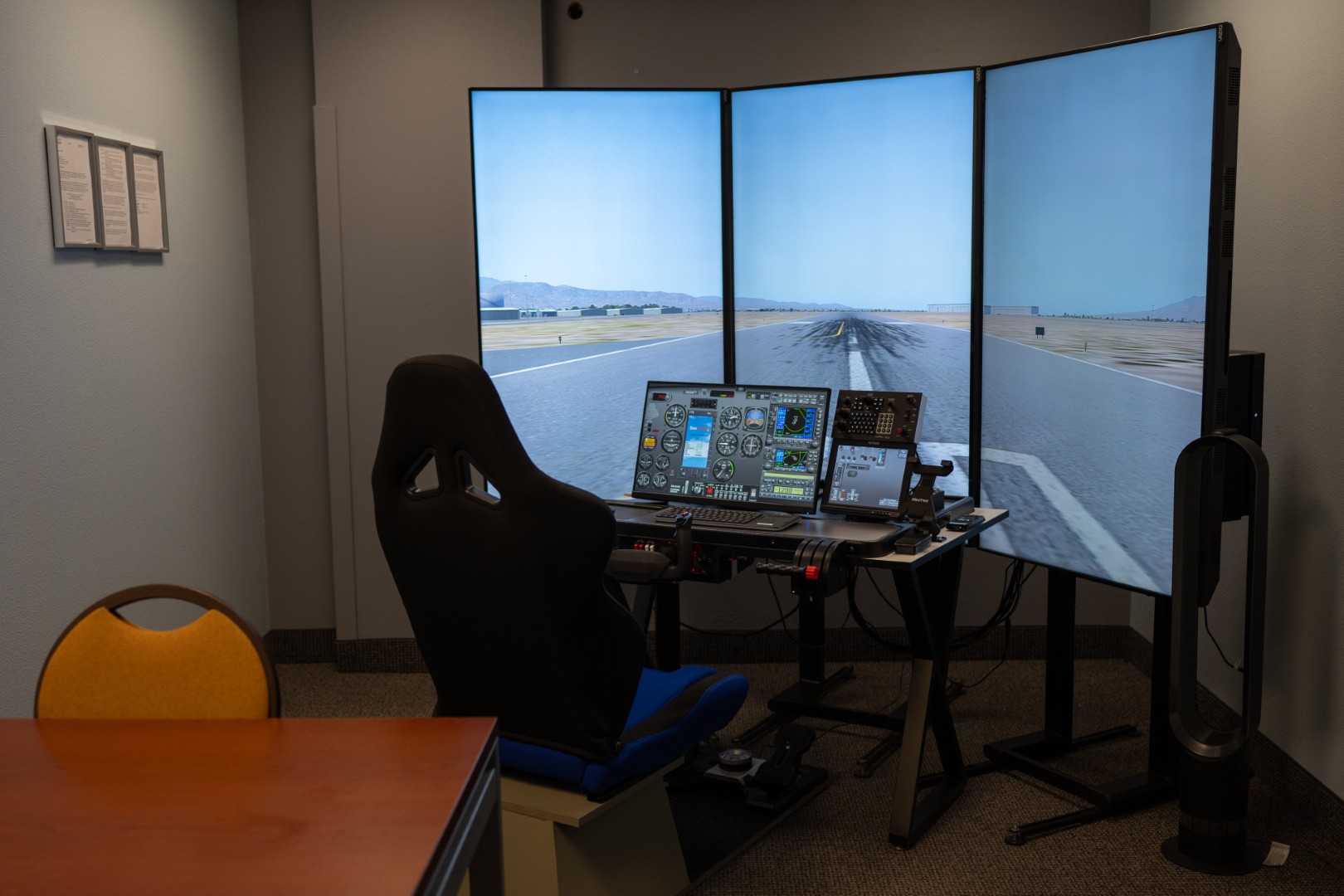
Simulator-supported training can help students practice procedures and cockpit workflows when it fits the lesson objective.
Use This Comparison Checklist Before You Choose
Before you enroll at a Las Vegas flight school, use this checklist to make the conversation more useful:
- Training goal: Are you starting with a discovery flight, private pilot training, or a later rating?
- Program continuity: Can the school support your likely next step after the first certificate or rating?
- Location: Can you reach the airport often enough to train consistently?
- Lesson structure: Does the school explain briefings, ground instruction, progress tracking, and checkride preparation?
- Aircraft access: Are the aircraft, simulator resources, scheduling process, and maintenance communication clear?
- Cost planning: Can you see how aircraft time, instructor time, tests, supplies, and examiner fees fit together?
- Financing and scholarships: Do you know which resources may be available and what still depends on provider eligibility?
- Instructor fit: Do you understand how instructor matching and schedule changes are handled?
- Culture: Do you feel comfortable asking beginner questions before money and momentum are on the line?
If you want to compare those items with our team, start with our Las Vegas flight training programs and bring your questions to the enrollment conversation.
Las Vegas Flight School Questions
What is the first step if I am brand new to flying?
If you are curious and still weighing enrollment, start with a discovery flight in Las Vegas. If you already know you want to train, begin by comparing private pilot training and the full flight training program list.
Do I need experience before starting flight training?
No. Many students start with no flight time. The important part is choosing a school that explains the path from your first lesson through solo preparation, ground study, and checkride readiness. Our private pilot program is the usual starting point for new airplane students.
Is a Part 61 school easier than another type of school?
No. Part 61 training can offer more scheduling and pacing flexibility, but you still need to meet the FAA requirements for the certificate or rating you want. The right fit depends on your schedule, goals, budget, learning style, and available support. You can compare our Part 61 approach on the flight training page.
How should I compare flight training costs?
Compare the assumptions behind the number. Look for aircraft time, instructor time, ground instruction, simulator use, supplies, FAA test costs, checkride expenses, and what happens if you need more training. Start with training pricing, then review financing resources if you want help planning the budget.
Should I choose a school based on aircraft count?
Aircraft access matters, and the exact count is one part of the decision. Ask how scheduling works, what aircraft support your program, whether simulator resources are available, and how the school communicates maintenance or availability changes. Our fleet page can help you understand the aircraft side of the conversation.
What should career-track students compare?
Career-minded students should look beyond the first certificate and ask how the school supports instrument, commercial, CFI, multi-engine, and simulator-supported training. Treat that as a planning path for future training decisions. You can start with the flight training hub and talk with our team about the sequence that fits your goals.
Compare Your Next Step With Vegas Aviation
Choosing a Las Vegas flight school is easier when the school helps you see the path before you commit. Compare the training goal, airport location, lesson structure, aircraft access, instructor fit, cost planning, and next-step support.
Your primary next step is to compare flight training programs. From there, you can decide whether to book a discovery flight, review pricing, or begin enrollment with a clearer plan in mind.


